
We may earn a commission when you buy through links on this page, at no extra cost to you. As an Amazon Associate we earn from qualifying purchases. Learn more.
Smart home security usually starts with cameras and locks, but the devices that actually prevent catastrophic loss are smoke and water sensors. A camera tells you someone broke in after the fact. A water sensor can stop a slow leak from becoming a five-figure insurance claim before you even get home. This guide skips the marketing copy and focuses on what matters: how fast these sensors actually detect a problem, where false alarms really come from in lived-in homes, and how placement changes everything.
The picks at a glance
- Our pick: Google Nest Protect: best overall smart smoke and CO detector for most households wanting reliable alerts without constant false triggers. Check price ›
- Budget pick: Govee Water Leak Detector: a low-cost, no-subscription water sensor that covers the basics well for apartments and single-point risks like washing machines. Check price ›
- Upgrade pick: Moen Flo Smart Water Shutoff: a flow-based system that monitors whole-home water usage and can automatically shut off the main supply when it detects abnormal flow, for households that want automated response, not just an alert. Check price ›
Why Smoke and Water Sensors Matter More Than Cameras
Home security discussions tend to fixate on break-ins, but fire and water damage are statistically far more common causes of major homeowner loss. The National Fire Protection Association has long noted that working smoke alarms cut fire death risk roughly in half. Water damage, meanwhile, is one of the most frequently filed homeowners insurance claims in the US according to industry data from the Insurance Information Institute. A smart home security setup that ignores these risks is leaving the biggest exposure unmonitored.
Smart versions of these sensors add one critical feature traditional detectors lack: a remote push notification when you are not home. A standard smoke alarm screaming in an empty house does nothing. A connected one can alert you, your neighbor, or a monitoring service in seconds.
How Detection Speed Actually Works (and Why Lab Numbers Mislead You)
Manufacturers love to cite detection speeds from controlled smoke chamber or lab leak tests, but real homes do not behave like labs. Smoke behaves differently depending on ceiling height, airflow from HVAC systems, and whether a fire is smoldering versus flaming. Water sensors depend entirely on contact, meaning a leak that starts two inches to the left of the sensor can go undetected for hours or days.
This is the single most important thing beginners miss when researching smart home security for beginners: a sensor’s rated response time only matters if the hazard reaches the sensor in the first place. Placement, not raw sensor sensitivity, is usually the deciding factor in real-world performance.
Photoelectric vs. Ionization Smoke Sensing
Most smart smoke detectors, including the Nest Protect, use photoelectric sensing, which responds faster to smoldering fires (the kind that start from an overheated cord or a cigarette) than ionization sensors do. Ionization sensors react faster to fast, flaming fires but are more prone to nuisance alarms from cooking. Dual-sensor models attempt to split the difference, and this is worth checking before you buy rather than assuming all smoke detectors behave the same way.
Capacitive vs. Conductive Water Sensing
Most consumer water leak sensors use conductive metal probes that detect moisture bridging a small gap. This method is cheap and reliable but requires direct contact with water, meaning placement on the floor next to (not under) an appliance is critical. A few higher-end models add rope sensors or extended probes to cover a wider physical area, which matters a lot in utility rooms with multiple pipe runs.
Where False Alarms Actually Happen (Not in the Lab)
Manufacturer literature rarely discusses false positives honestly, but widely reported owner feedback across retailer reviews and smart home forums points to consistent patterns. Steam from showers near hallway smoke detectors is one of the most common complaints. Water sensors placed too close to a humidifier or in a room with high ambient condensation also trigger far more false alerts than advertised specs suggest.
Kitchen Smoke Detectors Are the Worst Offenders
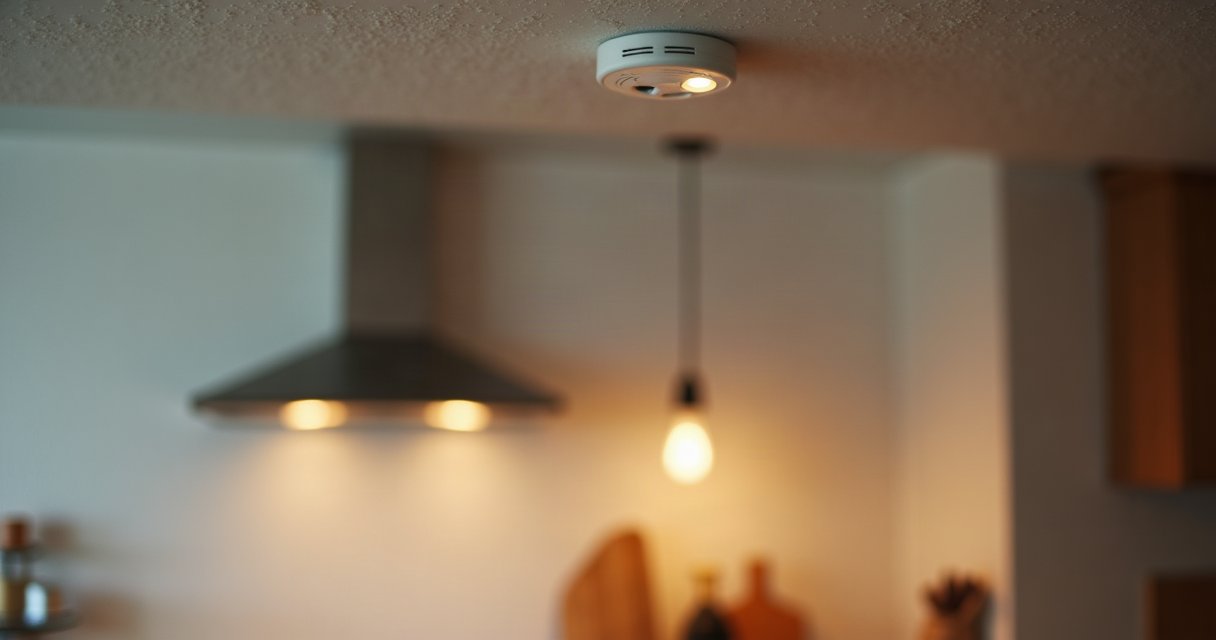
Placing any smoke sensor, smart or not, within 10 feet of a stove is a near-guaranteed source of nuisance alarms from normal cooking. The fix recommended by most fire safety guidelines, including NFPA placement standards, is to keep smoke detectors at least 10 feet from cooking appliances and to use heat sensors or dedicated cooking-area smoke sensors instead. This single smart home security mistake (crowding detectors too close to kitchens) accounts for a large share of the “my smart smoke detector keeps going off for no reason” complaints seen in owner reviews.
Water Sensors Near HVAC Condensate Lines
Condensate from air conditioning units mimics a slow leak almost perfectly, and sensors placed directly beneath AC drain pans often report intermittent low-level moisture that triggers alerts without an actual plumbing failure. This is a known pattern in owner feedback on leak sensor products, and it is rarely mentioned in product marketing. The practical fix is placing sensors adjacent to, not directly under, the drain pan, so you catch an overflow without reacting to every bit of normal condensation.
Best Smart Smoke Detector Overall
Our pick: Google Nest Protect
The Nest Protect remains the most consistently well-reviewed smart smoke and CO detector on the market, and the reasoning holds up against both spec sheets and owner feedback. It combines photoelectric smoke sensing with a heat sensor and carbon monoxide detection in one unit, which reduces the need for separate devices throughout the home. Its “Hush” feature, which lets you silence a nuisance alarm from your phone or by waving under it, directly addresses the kitchen false-alarm problem described above.
Typical pricing runs in the $100 to $130 range per unit, which is higher than basic smart smoke detectors, but the combined CO and smoke sensing in a single reliable package justifies it for most households. Owner feedback consistently cites dependable app notifications and a relatively low nuisance-alarm rate when placed per Nest’s own siting guidance. The main drawback reported by users is the lack of a hardwired interconnect option in older homes without compatible wiring, which the battery-only version resolves but at a tradeoff in long-term maintenance.
Where to Place It for Real Results
Nest and fire safety authorities agree: place smoke detectors in every bedroom, outside each sleeping area, and on every level of the home, consistent with NFPA guidelines. Avoid dead air corners near ceiling fans and keep units out of bathrooms where shower steam will cause recurring false alarms. For kitchens, a heat-only sensor positioned closer to the cooking area, paired with a smoke sensor further down the hallway, tends to produce far fewer nuisance triggers than crowding a smoke sensor into the kitchen itself.
Best Budget Water Leak Sensor
Budget pick: Govee Water Leak Detector
For single-point risks like a washing machine, water heater, or under-sink pipe, the Govee Water Leak Detector offers reliable conductive-probe detection at a price point usually between $15 and $25 per unit. It connects via Bluetooth or Wi-Fi bridge depending on the model variant, and owner reviews consistently praise the loud 100-decibel local alarm as a genuinely useful backup even when phone notifications are delayed. This makes it a sound entry point for smart home security for beginners who want meaningful protection without committing to a whole-home system.
The tradeoff is range and coverage. Each unit only detects water that directly contacts its probes, so multiple units are needed for a utility room with more than one failure point. Buying three or four units for appliance zones costs roughly the same as one premium whole-home system, so this pick works best for renters or smaller homes with concentrated risk areas rather than large basements with multiple pipe runs.
Best Whole-Home Water Protection System
Upgrade pick: Moen Flo Smart Water Shutoff
Point sensors only alert you after water has already escaped. For households that want to actually stop a leak rather than just hear about it, pairing leak detection with an automatic shutoff valve changes the outcome entirely. The Moen Flo system and similar flow-based options integrate with the main water line, closing the supply automatically when abnormal flow patterns are detected, not just when a puddle forms.
Typical system cost including a shutoff valve installation runs from $300 to $500 depending on pipe size and whether professional installation is required. This is a meaningfully bigger investment than point sensors, but for homes with finished basements, hardwood floors, or a history of plumbing issues, the cost of one prevented burst-pipe event typically exceeds the system price many times over. Owner and installer feedback generally rates these systems highly for peace of mind, with the main complaint being the need for professional installation on older plumbing that lacks a standard shutoff valve location.
Smart Smoke and Water Sensors Compared
| Product | Type | Typical Price | Best For |
|---|---|---|---|
| Google Nest Protect | Smoke + CO | $100-$130 | Whole-home smoke and CO coverage |
| Govee Water Leak Detector | Point water sensor | $15-$25 | Single-appliance leak monitoring |
| Moen Flo Smart Water Shutoff | Flow-based + shutoff | $300-$500 | Automated whole-home leak prevention |
The Most Common Smart Home Security Mistakes With These Sensors
Beyond placement near kitchens or HVAC units, a few other patterns show up repeatedly in owner feedback and smart home security forums. These are worth addressing directly because fixing them costs nothing beyond attention.
Ignoring Battery and Connectivity Health Alerts
Many smart detectors send a low-battery or offline warning well before failure, but these notifications get buried in app clutter or muted after repeated dismissals. A sensor that silently went offline three weeks ago provides zero protection, which defeats the entire purpose of going smart in the first place. Checking device health monthly, the same way you’d test a traditional smoke alarm, closes this gap.
Relying on a Single Hub for All Alerts
If your smoke and water sensors route exclusively through a Wi-Fi-dependent hub and your internet goes down during a fire or burst pipe, you lose remote notification exactly when it matters most. Look for sensors with local siren backups, like the Govee’s onboard alarm, so detection still functions without connectivity. This is a basic resilience principle that applies across smart home security generally, not just these two sensor categories.
Skipping Insurance Discount Registration
Many insurers offer discounts for homes with monitored smoke and water leak detection, something frequently overlooked by buyers focused only on the tech itself. Checking with your homeowner’s or renter’s insurance provider after installing these systems can offset part of the purchase cost over time. It is a small step that is easy to forget amid the setup process but can meaningfully affect the long-term value of the purchase.
Final Recommendation
For most households building out smart home security beyond cameras and locks, the Nest Protect remains the strongest all-around smoke and CO option based on consistent owner feedback and sensible false-alarm mitigation features. Pair it with point water sensors like the Govee in high-risk appliance zones, and consider a whole-home shutoff system if your home has a history of plumbing issues or finished spaces that would suffer major damage from an undetected leak. The right combination depends on your home’s layout and risk points more than any single spec sheet number.
FAQ
Do smart smoke detectors replace the need for a professional fire alarm system?
No. Smart smoke detectors supplement home fire safety but do not replace code-required hardwired systems in homes where those are mandated, and they should still be paired with working carbon monoxide detection per NFPA guidance.
How many water sensors does a typical home actually need?
Most homes benefit from placing one sensor near each major appliance (washing machine, water heater, dishwasher) plus one in any basement area prone to flooding, which usually totals four to six units for an average single-family home.
Can I mix smart smoke detector brands within the same home?
Yes, but interconnected alerting (where one unit triggers all others) generally only works within the same ecosystem, so mixing brands means each device will alert independently rather than as a connected network.